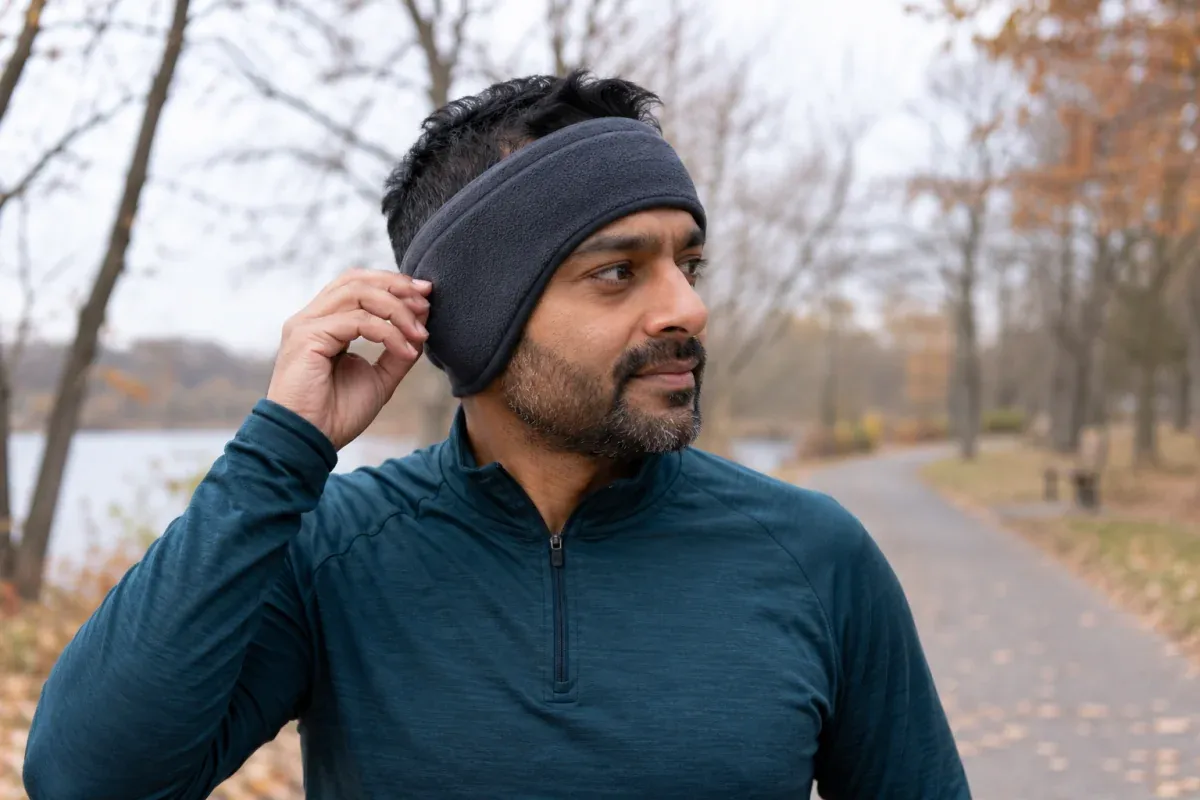
Your ear canal has almost no fatty tissue under the skin, which leaves it more exposed to cold and pressure than most other parts of your body. That's one reason a mild ache on a cold run can turn into a sharp, throbbing pain right after you stop and your body starts warming back up.
We cross-checked the usual explanations (cold air, jaw tension, bad earbuds) against guidance from ear, nose, and throat specialists, then organized every cause by the fix that actually works for it.
This guide covers 12 possible causes, from cold air and jaw tension to referred pain from your throat, matches each one to a same-day fix, and tells you exactly when it's time to see a doctor instead of adjusting your gear. Here's the breakdown.
Quick Answer: The Most Common Culprits
Most ear pain during or after running comes down to one of five things: cold or windy air, jaw tension, poorly fitted earbuds, referred pain from your throat or sinuses, or an underlying condition like allergies or an infection. The good news: almost all of these are fixable without seeing a doctor.
| Your symptom pattern | Likely cause | Try this first |
|---|---|---|
| Pain starts outdoors in cold or windy weather | Cold air, constricted blood vessels | Cover your ears (see the gear ladder below) |
| Pain matches your jaw feeling tight or sore | TMJ tension | Consciously relax your jaw; hydrate |
| Pain is worse with earbuds in | Poor fit or volume | Swap style, check the fit, lower the volume |
| Pain came on with a climb or elevation change | Pressure/barotrauma | Chew gum, yawn, or swallow to equalize |
| Pain came with a sore throat, stuffy nose, or neck stiffness | Referred pain or a sinus/allergy flare | Treat the throat/sinus issue, not the ear |
| Pain doesn't ease after warming up, or lasts over 2 days | Possible infection | See a doctor |
Is It Normal for Your Ears to Hurt When You Run?
Ear pain while running is common, but it isn't something to just accept as part of the sport. It almost always traces back to a specific, identifiable cause, and most of those causes have a same-day fix.

Treat this article as a troubleshooting flow: work through the causes below, match yours, and try the fix. If nothing fits or the pain doesn't budge, the red flag section further down tells you when it's time to stop guessing and see a doctor.
Cold Air and Wind: The #1 Cause
Cold weather is the single most common reason runners' ears hurt, both during a run and in the hour after. The skin in your ear canal has almost no fatty tissue underneath it, so it has little insulation compared to the rest of your body.

When cold air or wind hits that thin skin, nerve endings fire and blood vessels constrict. Ronen Nazarian, MD, an ENT surgeon, explains that the pain is often "deep-seated because it's actually the sensitive bone beneath the skin that's reacting, rather than the skin itself." That's why simply pulling a hood up rarely helps: the wind still reaches the canal.
This is also why ears often hurt more after you stop than during the run. Exercise redirects blood toward your leg muscles and away from areas like the ears, which have little muscle of their own to keep them warm. Once you stop and your body starts rewarming, the sudden shift in blood flow can bring on a fresh wave of aching.
If you're indoors and the pain doesn't ease within about an hour, that's worth paying attention to (more on this in the red flag section).
Exostoses ("Surfer's Ear"): The Long-Term Version
If you've searched around, you may have come across "exostoses," a condition where the bone inside the ear canal thickens over years of repeated cold or water exposure. It's nicknamed "surfer's ear" because it's most common in that sport, but Dr. Nazarian notes it can affect any athlete who's regularly exposed to cold air or water.
Exostoses is not an infection and not the same thing as swimmer's ear (covered below). It develops slowly, and for some people it causes no symptoms at all. Others notice a feeling of fullness, fluid drainage, or hearing changes.
This is only a real concern if you've run for years with bare, uncovered ears in below-freezing temperatures. If you're new to this problem, it's unlikely to be the cause. It's included here so you know the term if you ever see it and don't confuse it with an infection.
Jaw Tension (TMJ) and Dehydration
The second most common cause is tension in your temporomandibular joint (TMJ), the hinge that connects your jaw to your skull, right next to your ear canal.

Runners often clench their jaw without noticing, especially during hard efforts or races. That clenching strains the TMJ, and because the joint sits so close to the ear, the soreness radiates directly into it. If you also grind your teeth at night, a morning run can compound the effect before you've even started.
Dehydration makes this worse. The TMJ relies on adequate joint fluid to move smoothly, and when you're under-hydrated, the joint gets more friction and discomfort, which can radiate into the ear canal or middle ear.
In practice: check your jaw every mile or so. If it's clenched, drop your shoulders, unclench, and let your jaw hang slightly open for a few strides. It sounds small, but it interrupts the tension pattern before it builds into pain.
Ill-Fitting or Too-Loud Headphones and Earbuds
If your ears only hurt when you're wearing earbuds, this is almost certainly your answer.

Poorly fitted buds put constant pressure on the ear canal, and that pressure gets worse when you add a hat, headband, or hood over the top in cold weather. Sweat buildup inside the earbud can also cause irritation, and it lets dirt and bacteria collect in the canal over time.
Volume is a separate issue. Music played too loud can overstimulate the inner ear, causing pressure, throbbing, and (with repeated exposure) real hearing damage. If your ears are ringing or feel "full" after a run with headphones, that's your body telling you the volume was too high, not that you have a fragile ear canal.
Air Pressure and Altitude Changes
Your middle and inner ear are sensitive to barometric pressure. A significant elevation gain during a run, especially a fast one, can create a pressure difference between your two eardrums, a mild form of the same barotrauma divers and flyers deal with.

The fix is the same one flight attendants tell you before takeoff: chew gum, yawn, or swallow. All three actions open your eustachian tube and let pressure equalize on both sides of the eardrum. If you already carry gum on long runs for energy or focus, it does double duty here; see the case for chewing gum while running if you want a rundown of when it helps and when it doesn't.
Referred Pain: When It's Not Actually Your Ear
Not every ache you feel in your ear starts in your ear. This is worth calling out as its own category, because it's easy to assume the ear itself is the problem when it isn't.

Strained neck muscles, a dry throat from mouth-breathing on a hard effort, or sinus congestion can all inflame tissue that shares nerve pathways with the ear. Your brain reads the signal as ear pain, even though nothing is actually wrong inside the ear.
A practical tell: press gently around your outer ear and canal. If it's not tender to the touch, and you also have a stiff neck or a sore throat, the pain is likely referred from somewhere nearby rather than coming from the ear itself. Treating the neck tension or throat irritation, not the ear, is what actually resolves it.
Underlying Conditions That Can Cause Ear Pain
The causes above are mostly mechanical or environmental, and mostly self-fixable. The conditions below are medical. They're less common as a first explanation, but worth ruling out if nothing above fits, or if you have other symptoms alongside the ear pain.
| Condition | Key distinction |
|---|---|
| Ear or sinus infection | An infection rather than cold-air exposure |
| Seasonal allergies | Symptoms follow an allergy trigger |
| Acid reflux (GERD) | Stomach acid travels back toward the throat |
| Swimmer’s ear | An infection of the outer ear canal |
| Perforated eardrum | A hole or tear in the eardrum |
NHS sources: Ear infections · Allergies · Reflux · Eardrum
Ear Infections and Sinus Infections
A middle ear infection (otitis media) or a sinus infection can both cause ear pain that gets more noticeable with the increased blood flow and pressure changes of exercise. Watch for dizziness, a popping or fullness sensation, a low-grade fever, or facial pressure alongside the ear pain. These need a doctor, not a gear fix.
Seasonal Allergies
Allergies cause the tissue around your eustachian tube to swell, which makes ears feel stuffy or full, sometimes with a mild ache. If this tracks with pollen season or a known allergy trigger, an over-the-counter antihistamine or decongestant before your run is a reasonable first step.
GERD (Acid Reflux)
Acid reflux can trigger symptoms well beyond heartburn, including referred discomfort up through the throat and into the ear. Some runners with GERD notice this connection specifically during exercise, when increased abdominal pressure can push acid further up.
If this sounds like you, the practical fix is timing and food choice: avoid running within a few hours of a large meal, and steer clear of acidic or fatty trigger foods before you run. If it's a recurring pattern, it's worth a conversation with a doctor rather than just managing it around your training.
Swimmer's Ear
Swimmer's ear (otitis externa) is a bacterial infection of the outer ear canal, caused by trapped moisture, whether that's pool water, sweat, or humid air. It's a different mechanism than exostoses above: an active infection, not a slow bone change, and it typically comes on faster with more obvious pain and sometimes discharge.
Perforated Eardrum
A torn or perforated eardrum is rare from running alone, but running can make an existing tear more uncomfortable. This is a "see a doctor" issue, not a "wait it out" one. Symptoms include sharp pain, fluid drainage, ringing, or a sudden change in hearing.
When Ear Pain During Running Is a Red Flag
Most of what's above resolves with a simple change: cover your ears, relax your jaw, fix your earbuds, or wait out a pressure change. Here's when to stop self-treating and get it checked:
| What you notice | Next step |
|---|---|
| Pain persists after warming up or keeps returning | Arrange a medical assessment |
| Pain lasts more than two days | Get medical advice |
| Sudden hearing loss | Seek urgent medical assessment |
| Ear pain with fever or dizziness | Get prompt medical advice |
| Fluid draining from the ear | Get prompt medical advice |
| Pain after a blow or injury to the ear | Have the ear checked |
NHS sources: Earache · Hearing loss
- Pain that doesn't ease within about an hour of warming up indoors. According to Dr. Nazarian, if warmth doesn't resolve it, that points toward an infection rather than a simple cold-air reaction.
- Pain that lasts more than 2 days, regardless of temperature or activity.
- Fever, dizziness, or a sudden change in hearing.
- Fluid or discharge draining from the ear.
- Pain following a direct blow or injury to the ear, even a minor one.
Any one of these is reason enough to see a doctor or an ENT. None of them are things to push through and hope resolve on their own.
How to Prevent Ear Pain When You Run
Once you know your likely cause, prevention is usually specific and fast to put into practice.
A Gear Ladder for Cold-Weather Ear Protection
Cold-related ear pain responds well to layering, but more coverage isn't automatically better; match the gear to the conditions instead of grabbing the heaviest option every time.
| Conditions | Gear | Why |
|---|---|---|
| Mild wind, cool but not cold | Earplugs (foam or custom-molded) | Blocks wind without overheating your ears; custom-molded plugs with a sound-permeable membrane let you stay aware of traffic |
| Genuinely cold | Headband or ear warmers | Targeted coverage that stays snug without the bulk of a full hat |
| Extreme cold or a long run outdoors | Hat or balaclava, layered with earmuffs | Full coverage for extended exposure; also reduces frostbite risk on the coldest days |
You'll know the layer is working if the ache doesn't start in the first place, not just if it's less bad afterward. If you're still getting pain at your current layer, move up the ladder rather than adding more of the same gear.
Fixes for Jaw Tension, Headphones, and Underlying Conditions
- Jaw tension: build in a jaw check every mile. Hydrate before and during longer runs. If clenching is a chronic problem beyond running, a mouth guard or a conversation with a dentist about TMJ is worth considering.
- Headphones: confirm you're using the right tip size, try an over-ear or bone-conduction style if in-ear buds keep bothering you, clean your earbuds after sweaty runs, and keep volume at a level where you could still hear a car behind you.
- Allergies and sinus issues: treat the underlying trigger (antihistamine, decongestant, or avoiding your known trigger before a run) rather than only addressing the ear symptom.
- GERD: adjust meal timing before runs and flag a recurring pattern to your doctor.
- Infections or a perforated eardrum: these aren't self-fixable. See a doctor for treatment rather than adjusting gear or timing.
A quick self-check before your next run, if you're still not sure what's causing it:
- Is it cold or windy where I'm running? If yes, start with the gear ladder.
- Am I wearing earbuds, and does the pain track with them? If yes, check fit and volume first.
- Do I have a sore throat, stiff neck, or stuffy nose along with the ear pain? If yes, it's likely referred, treat that instead.
What to Do Next
Match your symptom pattern to a cause using the quick answer table at the top, try the specific fix for that cause on your next run, and give it one or two sessions before deciding it didn't work. If you've ruled out the common causes, or you hit any of the red flags above, that's your signal to see a doctor rather than keep experimenting with gear. Most runners find their ears stop hurting the moment they address the actual cause instead of just pushing through it.

Frequently asked questions
Why do my ears hurt more after I stop running than during the run?
Running redirects blood toward your leg muscles and away from areas like your ears, which have little muscle of their own to keep warm. When you stop, blood flow shifts back quickly, and that sudden change can trigger a fresh wave of aching in the ear canal, especially in cold weather. It's a normal response to temperature and blood flow, not a sign of injury on its own.
Is it normal for your ears to hurt when running in cold weather?
Yes, cold-weather ear pain is common and usually traces back to constricted blood vessels and thin, poorly insulated skin in the ear canal. It's uncomfortable but not dangerous for most runners, and it typically eases within about an hour of warming up indoors. If the ache doesn't ease after warming up, or it happens on every cold run, covering your ears with a headband or earplugs is the simplest fix.
What's the difference between swimmer's ear and surfer's ear (exostoses)?
Swimmer's ear is a bacterial infection of the outer ear canal caused by trapped moisture, and it usually comes on fast with clear pain or discharge. Surfer's ear (exostoses) is a slow bone change in the ear canal from years of repeated cold or water exposure, and it can cause no symptoms at all for a long time. The names sound similar, but one is an active infection and the other is a gradual structural change.
Can a buildup of earwax cause ear pain when you run?
Yes, a heavy buildup of earwax can trap moisture and create pressure in the ear canal, and running's increased blood flow can make that pressure more noticeable. It's a less common cause than cold air, jaw tension, or ill-fitting earbuds, but worth ruling out if your ears also feel blocked or muffled. A doctor can check for impaction and remove excess wax safely if that turns out to be the cause.
Does chewing gum help with ear pressure while running?
Yes, chewing gum makes you swallow more often, which opens the eustachian tube and helps equalize pressure between your middle ear and the outside air. It's most useful during climbs or fast elevation changes, when pressure differences build up quickly. Yawning or swallowing on purpose works the same way if you'd rather skip the gum.
Can loud music through headphones damage your hearing while running?
Yes, listening to music above safe volume levels can overstimulate the inner ear and contribute to real hearing damage over time, not just temporary throbbing. Ringing or a "full" feeling in your ears after a run is a sign the volume was too high. Keeping the volume low enough to hear traffic around you protects your hearing and your safety at the same time.
When should ear pain after running be checked out by a doctor?
See a doctor if the pain doesn't ease within about an hour of warming up indoors, or if it lasts more than two days. Fever, dizziness, sudden hearing changes, or fluid draining from the ear are also reasons to get it checked rather than waiting it out. Pain following a direct blow to the ear, even a minor one, is worth a same-week appointment too.
I completed my first 10K on a dare. In a year, I ran a half-marathon. Another year later, I finished a marathon race. Today I run 4 marathons a year and a half-marathon every week. I learned everything about running the hard way. So, I help runners achieve better results easier.