Summarize this article with AI
Adductors move your thigh toward the center of your body; abductors move it away. Both help control your hips as you balance on one leg during each running stride. That in-or-out distinction also tells you which exercise or gym machine works each group.
Adductor vs. Abductor: The Difference at a Glance
Imagine a line running from your nose between your feet. Moving one leg sideways away from that line is hip abduction; bringing it back is hip adduction. In a jumping jack, your legs open through abduction and close through adduction.
| Hip adductors | Hip abductors | |
|---|---|---|
| Direction | Pull the thigh inward, toward your midline | Move the thigh outward, away from your midline |
| Main location | Inner thigh | Outer hip and buttock |
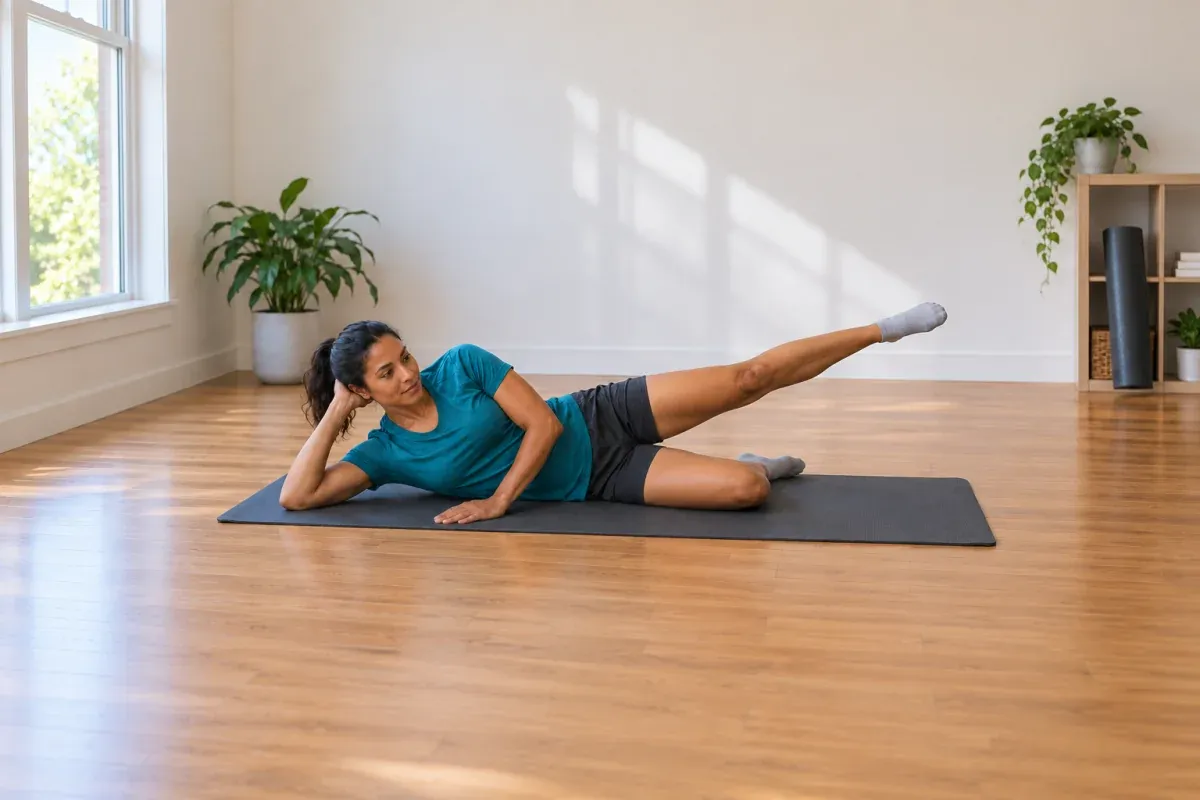
| Simple exercise | Lift the bottom leg while lying on your side | Lift the top leg while lying on your side |
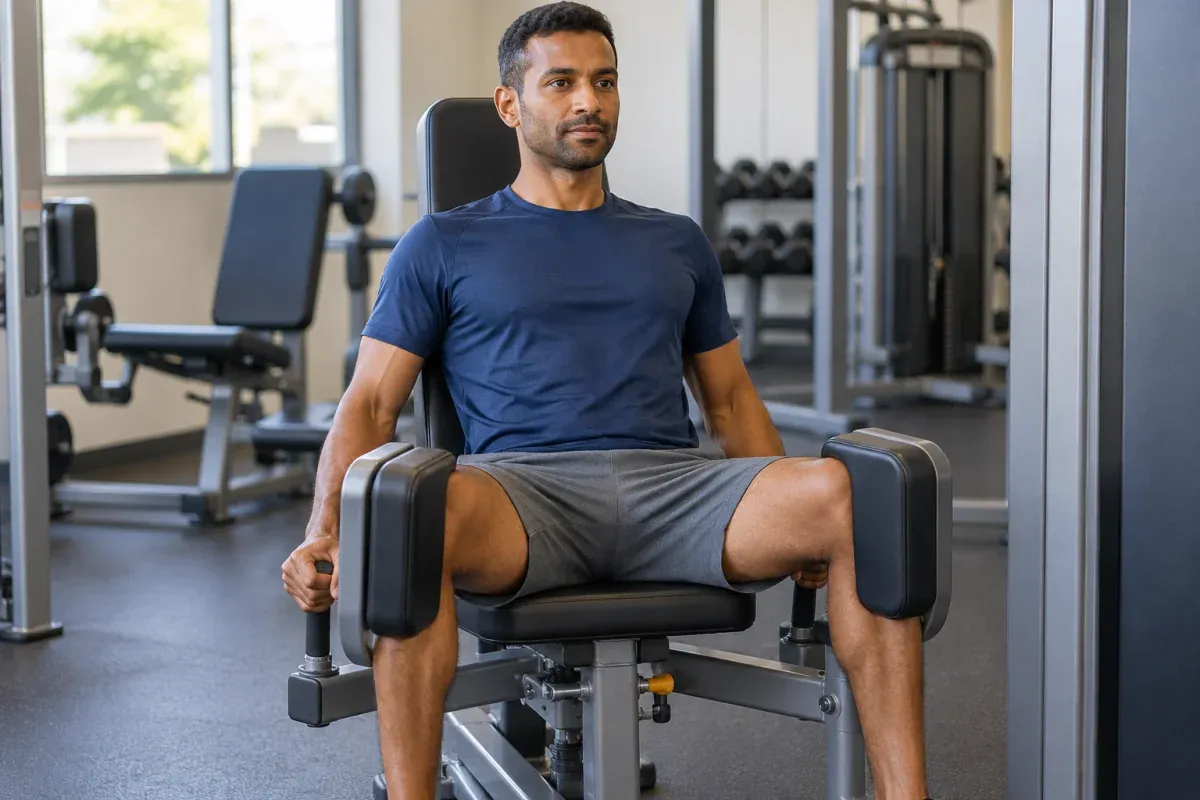
| Gym machine | Squeeze the pads inward | Press the pads outward |
The names describe movement, not a single muscle. The inner-thigh adductor group includes muscles such as adductor longus and adductor magnus. The main hip abductors include gluteus medius, gluteus minimus, and tensor fasciae latae. Cleveland Clinic's thigh anatomy guide and hip abductor guide explain the groups and their locations.
To remember the names, adduction adds the leg back; abduction takes it away.
What They Do While You Run
As you run, you repeatedly balance on one leg. The abductors on your standing side help keep your pelvis from dropping toward the leg in the air. Your adductors help guide your thigh and support balance. Both groups work with the rest of your hips, legs, and trunk. Cleveland Clinic describes the abductors' pelvic support and the adductors' role in leg alignment.
Stronger abductors do not automatically fix your stride. A 2026 review of 19 studies in healthy runners found insufficient evidence of a consistent link between hip abductor strength and running mechanics, and no convincing evidence that strengthening these muscles alone reliably changes running form. Train them as part of general strength work, without expecting one exercise to prevent injuries.

How to Train Both Without a Machine
If you are currently pain-free, two side-lying movements can help you practice and strengthen each direction. The American Academy of Orthopaedic Surgeons hip conditioning program shows both. For general strength work, try eight slow repetitions per side, two to three days a week. Warm up with 5 to 10 minutes of easy walking and leave at least a day between sessions.
The AAOS program is designed for rehabilitation under medical supervision. If you are recovering from a hip injury or surgery, ask your clinician which exercises and how many repetitions fit your situation.
Outer hip: side-lying abduction
- Lie on your side with your bottom knee bent for support. Keep your hips stacked, one above the other.
- Straighten the top leg. Raise it slowly to the side without rolling your body backward or turning the leg to gain height.
- Hold briefly, then lower with control. You should feel effort around the outside of your hip or buttock. Do eight repetitions, then switch sides.
Start with a smaller lift if that helps you keep your hips still. The AAOS guide shows a five-second hold, but control matters more than height.
Inner thigh: side-lying adduction
- Stay on your side. Bend the top leg and place its foot on the floor in front of your straight bottom leg.
- Lift the bottom leg a few inches, keeping your torso steady. Do not roll backward to make the lift easier.
- Pause, then lower slowly. You should feel effort in the inner thigh of the lifting leg. Do eight repetitions, then switch sides.
The AAOS guide shows a six- to eight-inch lift and a five-second hold. If eight controlled repetitions become easy, work up to 12 before adding resistance.
Which Gym Machine Is Which?
The names follow the same direction rule. On the abductor machine, you press your knees outward against the pads. On the adductor machine, you squeeze them inward. Choose a resistance that lets you move slowly and sit steadily. Neither machine is mandatory; the side-lying exercises above train the same movement directions without equipment.
If you only have a few minutes, do one pain-free exercise for each direction. These moves can fit alongside squats and other general strength work. Strength work can be useful, but it does not diagnose or cure running pain by itself. See our guide to runners' legs for a broader look at the muscles involved in running.
When Hip or Groin Pain Changes the Plan
Muscle effort during a set is expected. Stop if you feel sharp pain or if symptoms worsen. Groin pain does not, by itself, identify an adductor injury, and outer-hip pain does not identify an abductor injury. Other structures can hurt in those areas.
Contact a healthcare professional if pain persists or worsens, or if you notice a pop, bruising, swelling, or ongoing weakness. If you cannot put weight on the leg, seek medical care promptly. Cleveland Clinic lists these as signs worth medical assessment. If pain changes how you walk or run, stop the exercises and get advice before resuming. The AAOS program also advises against exercising through pain.

The Takeaway for Your Next Strength Session
Remember the directions: in is adduction; out is abduction. If you are pain-free, warm up, then try eight slow top-leg lifts and eight slow bottom-leg lifts on each side. Repeat two to three days a week if it feels comfortable. No single hip exercise is a shortcut to better running form.

Frequently asked questions
Is the inner thigh an adductor or an abductor?
The muscles along the inner thigh are mainly hip adductors. They draw your thigh toward your body's center. The main hip abductors sit around the outer hip and move the leg away.
Which machine works the gluteus medius?
The abductor machine targets the outer hip, including the gluteus medius, when you press your knees outward. A side-lying top-leg raise is a no-machine option. Choose a load that lets you move without rocking your torso.
Do runners need both hip adductor and abductor exercises?
Both movement directions can fit into a runner's general strength routine. A simple choice is one controlled outer-hip move and one inner-thigh move. No single exercise guarantees a change in running form or prevents injury.
Can squats replace direct adductor and abductor work?
Squats strengthen your hips and legs, but they do not directly train the sideways movements of hip abduction and adduction. If you want to train those directions, add one controlled exercise for each. You do not need a long list of isolation moves.
How often should I train these muscles?
For a general starting point, the AAOS hip conditioning guide uses two to three days a week for side-lying hip abduction and adduction. Start with a manageable amount and let soreness settle before repeating. If you are recovering from injury, ask a clinician for a plan that fits you.
What if an inner-thigh exercise causes groin pain?
Stop the exercise if it causes pain or makes an existing symptom worse. Reduce activity that provokes the pain and contact a healthcare professional if it persists, worsens, or affects walking. Pain location alone cannot tell you which structure is injured.
Does a weak hip abductor cause poor running form?
Hip abductor weakness alone does not explain every running form issue. Research in healthy runners has not shown that strengthening these muscles by itself reliably changes running mechanics. If you have pain or a persistent concern about your stride, a qualified clinician can assess the whole picture.
I completed my first 10K on a dare. In a year, I ran a half-marathon. Another year later, I finished a marathon race. Today I run 4 marathons a year and a half-marathon every week. I learned everything about running the hard way. So, I help runners achieve better results easier.