Summarize this article with AI
Runners do not need neck workouts to improve their pace. If you want to add some focused neck strength work, this gentle routine needs no weights or special equipment.
It starts with easy movement, then uses your hands for light resistance. Here is how to do the moves, fit them around your runs, and recognize when to stop.
Neck workouts: a beginner routine
Sit or stand comfortably upright for this five-move sequence. It is a starting routine for general fitness, not a treatment plan. If you have neck pain now, read the safety section before trying it.
| Move | Starter amount | What to check |
|---|---|---|
| Easy head turns | Two slow turns to each side | Stay within a comfortable range. These are for movement, not strength. |
| Chin tucks | Four small repetitions, pausing briefly | Slide your head straight back without tipping your chin up or down. |
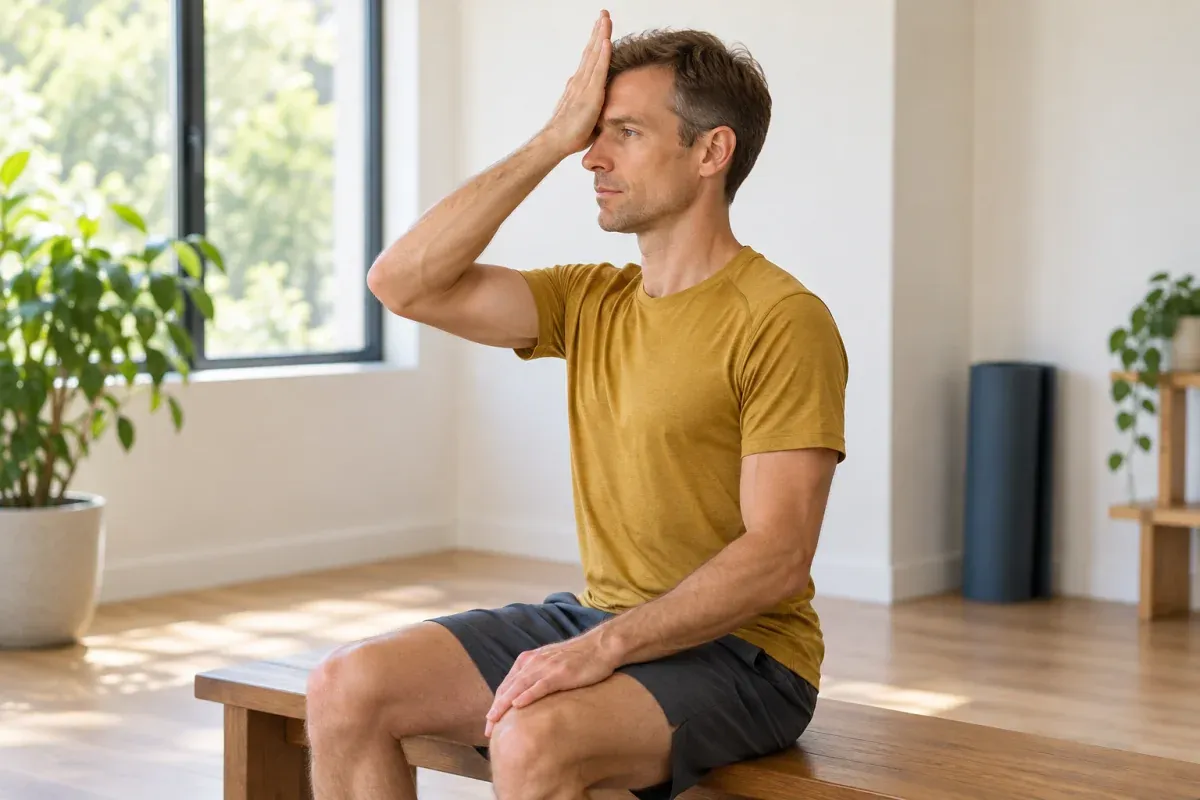
| Hand-resisted front hold | Two short holds | Your head stays still as your forehead presses lightly into your hand. |
| Hand-resisted back hold | Two short holds | Press the back of your head into your hands without looking up. |
| Hand-resisted side holds | Two short holds per side | Press the side of your head into your hand without tilting. |
For each resisted hold, press lightly for about three to five seconds, then relax fully. Breathe normally and rest as needed. These amounts are a starting example, not a proven dose.
Before you start: If turning your head or sitting upright hurts, skip the holds and ask a healthcare professional what movements fit your situation. NHS Inform advises stopping exercises that cause new pain or worsen symptoms.
How to do each neck exercise
Head turns and chin tucks
Turn your head slowly as if looking over one shoulder, return to center, then turn the other way. Stay within a comfortable range.
For a chin tuck, look forward and draw your head back a small distance, as though making a slight double chin. Keep your jaw loose. Avoid looking down or lifting your chin. Kaiser's exercise sheet describes this movement.
Front, back, and side holds
An isometric hold makes your neck muscles work while your head stays still. Put a hand on your forehead and gently press your head into it. Use your hand to keep your head in place. Then place your hands behind your head and press backward without looking up.
For the sides, put your right hand above your right ear. Gently press your head toward your hand without tilting; then switch sides. Keep your shoulders relaxed and your neck in line with your body. Kaiser Permanente's exercise sheet describes these three directions and advises pressing below your maximum effort. Hinge Health's physical therapist guidance also describes hand-resisted holds.
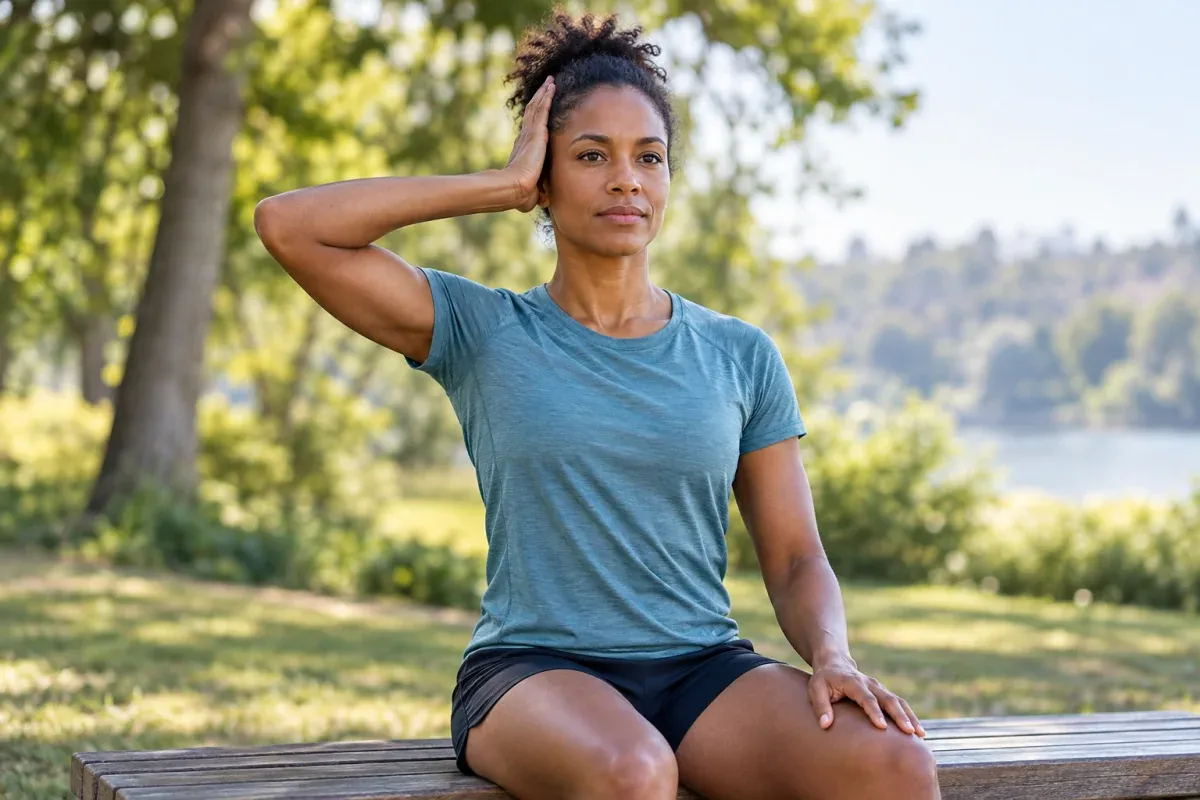
If your head starts to move, your jaw clenches, or your shoulders creep toward your ears, ease up. Aim for a small muscle effort, not a test of how hard you can push.
How often should runners train their neck?
Try the routine once and notice how your neck feels later and the next morning. If it remains comfortable, once or twice a week after an easy run or alongside a strength session is a reasonable starting schedule, not a proven optimum. NHS Inform recommends adding neck exercises gradually and stopping if symptoms worsen.
Once the light holds feel controlled, you can add one repetition or a little hold time. You can also keep the routine short. If your neck feels sore after a run, wait until it feels comfortable before doing the holds.
Do not count on this routine to improve pace, running economy, or race results. If training time is limited, prioritize the running and strength work you already do.

When to stop or get help
Stop a movement if it causes a headache, dizziness, or new neck pain, or makes existing symptoms worse. If symptoms persist, worsen, or concern you, ask a healthcare professional for advice. If you have a diagnosed neck condition, have recently had neck surgery, or are recovering from an injury, ask your clinician what is appropriate for you. NHS Inform's exercise guidance also advises stopping if exercise brings on new pain or worsens symptoms.

Seek urgent medical care for new or worsening arm or leg weakness or numbness, clumsy hands, trouble with balance or walking, or neck pain with a severe headache. NHS Inform lists these as warning signs. After a significant injury, seek medical assessment before exercising your neck.
Frequently asked questions
Do runners need neck workouts?
No. Neck workouts are optional general strength work, with no established running-speed benefit. If you want to try them, begin with light holds that fit around your normal training.
How hard should I press during a neck hold?
Press lightly enough that your head stays still and you can breathe normally. If your head moves, your jaw clenches, or your shoulders rise, reduce the pressure.
How often should I do the beginner routine?
Try one session and see how your neck feels later and the next morning. If it remains comfortable, once or twice a week is a practical starting schedule, not a required or proven dose.
Do head turns strengthen my neck?
Head turns take your neck through a comfortable range of motion. The hand-resisted holds are the strengthening part: your neck muscles work while your head stays still.
Should I use weights or a neck harness?
You do not need either for this starter routine. Your hand can provide adjustable resistance, and starting without a load makes it easier to keep the movement controlled.
What if a chin tuck or hold causes a headache or neck pain?
Stop that movement rather than pushing through it. The same applies if you feel dizzy. If a symptom persists, worsens, or concerns you, ask a healthcare professional for advice before trying again.
When should I get medical help instead of exercising my neck?
Seek urgent medical care for new or worsening arm or leg weakness or numbness, clumsy hands, trouble with balance or walking, or neck pain with a severe headache. Get individual guidance before this routine if you have a diagnosed neck condition, recent neck surgery, or are recovering from an injury.
I completed my first 10K on a dare. In a year, I ran a half-marathon. Another year later, I finished a marathon race. Today I run 4 marathons a year and a half-marathon every week. I learned everything about running the hard way. So, I help runners achieve better results easier.